





Tech-Info
Understanding USB 3.1 / DisplayPort Alt Mode vs. Thunderbolt: A Comprehensive Guide

USB-C, DisplayPort Alt Mode and Thunderbolt: What You Need to Know Before Buying a Docking Station
Not every USB-C port can run a monitor. That is the most important thing to understand before buying a docking station, USB-C monitor, dual monitor bundle or display adapter.
Many laptops now use the same small oval-shaped USB-C connector, but the port behind that connector can support very different features. Some USB-C ports only handle data and charging. Others can send video to an external monitor using DisplayPort Alt Mode. Higher-end ports may support Thunderbolt, which can handle fast data, video, power and advanced docking through one cable.
This guide explains the difference in plain English so you can make a better buying decision and avoid ordering the wrong docking station for your laptop.
Quick Answer
For a docking station to run external monitors from a USB-C port, your laptop usually needs USB-C with DisplayPort Alt Mode or Thunderbolt support. A basic USB-C port may fit the cable, but it may not send a video signal to a monitor.
If you want a simple rule:
- USB-C only: may handle data and charging, but may not run a monitor.
- USB-C with DisplayPort symbol: usually supports video output to monitors.
- Thunderbolt 3 or Thunderbolt 4: usually supports video, fast data, docking and charging, depending on the laptop and dock.
If you are unsure, check the symbol beside the USB-C port, look up your laptop model, or contact NZ Laptop Wholesale before buying a dock.
Why This Matters When Buying a Docking Station
A docking station can turn a laptop into a tidy desktop-style workstation. With the right dock, you can connect monitors, keyboard, mouse, Ethernet, speakers, USB devices and sometimes laptop charging through one cable.
The problem is that USB-C ports are not all the same. Two laptops can have identical-looking USB-C ports, but one may support external monitors while the other does not. This is why some customers plug in a USB-C dock and find that the keyboard and mouse work, but the monitor does not.
Before buying a dock, the key question is not just “Does my laptop have USB-C?” The better question is:
Does my laptop’s USB-C port support video output, DisplayPort Alt Mode or Thunderbolt?
USB-C vs DisplayPort Alt Mode vs Thunderbolt
| Connection Type | What It Means | Can It Run Monitors? | Best For |
|---|---|---|---|
| USB-C / USB 3.1 Type-C | The physical USB-C connector and USB data connection. | Not always. Some USB-C ports do not support video. | USB devices, data transfer, charging, basic accessories. |
| USB-C with DisplayPort Alt Mode | A USB-C port that can also send DisplayPort video. | Usually yes, if the laptop, dock and monitor support it. | External monitors, USB-C docks, home office setups, dual screens. |
| Thunderbolt 3 or Thunderbolt 4 | A higher-performance connection using the USB-C connector. | Usually yes, with strong docking and monitor support. | Premium docking, multiple displays, fast storage, advanced workstations. |
1. USB-C / USB 3.1 Type-C: Same Shape, Not Always the Same Features
USB-C describes the small oval connector found on many modern laptops, tablets, phones, monitors and docking stations. It is reversible, compact and useful, but the connector shape alone does not tell you everything the port can do.
A USB-C port may support:
- USB data transfer
- Charging or power delivery
- External display output
- Docking station support
- Thunderbolt features
Or it may only support some of those features.
This is where many buyers get caught. A laptop can have a USB-C port that works perfectly with a USB flash drive, keyboard, mouse or phone cable, but still cannot send a picture to a monitor through a USB-C dock.
When USB-C Alone Is Enough
A basic USB-C port may be fine if you only need to connect:
- USB flash drives
- External hard drives or SSDs
- Keyboards and mice
- Phone charging cables
- Some basic USB hubs
When USB-C Alone May Not Be Enough
USB-C alone may not be enough if you want to connect:
- An external monitor
- A USB-C to HDMI adapter
- A USB-C to DisplayPort adapter
- A USB-C docking station with monitor outputs
- A dual monitor dock
For those jobs, you usually need DisplayPort Alt Mode, Thunderbolt, or a DisplayLink-based docking station.
2. DisplayPort Alt Mode: The Feature Many Docking Stations Need
DisplayPort Alt Mode allows a USB-C port to send a video signal to an external monitor. This is one of the most important features to check before buying a USB-C dock or display adapter.
If your laptop supports USB-C with DisplayPort Alt Mode, it can often connect to:
- USB-C docking stations with HDMI or DisplayPort outputs
- USB-C monitors
- USB-C to HDMI adapters
- USB-C to DisplayPort adapters
- Some dual monitor docking setups
DisplayPort Alt Mode is especially common on business-grade laptops, including many Dell Latitude, HP EliteBook, HP ProBook and Lenovo ThinkPad models.
How to Identify DisplayPort Alt Mode
Look beside the USB-C port for a small DisplayPort symbol. It often looks like a capital D with a P inside or beside it.
If you see that symbol near the USB-C port, it is a good sign that the port can output video. However, it is still worth checking the laptop specifications, especially if you want dual monitors or higher resolutions.
3. Thunderbolt 3 and Thunderbolt 4: Higher-End Docking Support
Thunderbolt 3 and Thunderbolt 4 use the same USB-C shaped connector, but the port usually supports much more than a basic USB-C connection.
A Thunderbolt port may support:
- External monitors
- High-speed data transfer
- Docking stations
- Laptop charging through compatible docks
- Multiple displays, depending on the laptop and dock
- High-performance accessories such as fast external storage
Thunderbolt ports are often marked with a small lightning bolt symbol. If your laptop has a Thunderbolt port, it will usually work well with a Thunderbolt dock and may also work with many USB-C docks. The exact result still depends on the laptop, dock, monitor resolution and operating system.
Thunderbolt Dock vs USB-C Dock
A Thunderbolt dock is usually the better choice for higher-end laptops and more demanding workstation setups. A USB-C dock is often more affordable and may be perfectly suitable for everyday office use.
| Dock Type | Typical Use | Good Choice When |
|---|---|---|
| USB-C Dock | General office docking, monitors, keyboard, mouse, Ethernet and charging on compatible laptops. | Your laptop supports USB-C DisplayPort Alt Mode and you want a practical desk setup. |
| Thunderbolt Dock | Higher-performance docking, multiple displays, fast data devices and premium workstations. | Your laptop has Thunderbolt 3 or 4 and you want the strongest compatibility within that standard. |
| DisplayLink Dock | USB-based docking using software drivers to run displays. | Your laptop does not support native USB-C video, or you need extra monitor options through USB-A or USB-C. |
What Do the Symbols Beside the USB-C Port Mean?
The small symbol next to a USB-C port can tell you a lot about what that port might support.
| Symbol / Label | Likely Meaning | Docking Station Impact |
|---|---|---|
| No symbol or basic USB symbol | May be USB data only, or may support charging. Video support is not guaranteed. | Check the laptop specs before buying a USB-C dock for monitors. |
| DP symbol | USB-C with DisplayPort Alt Mode. | Usually suitable for USB-C docks and monitor adapters. |
| Lightning bolt | Thunderbolt 3 or Thunderbolt 4. | Usually suitable for Thunderbolt docks and many USB-C docking setups. |
| Battery or plug symbol | May indicate charging or power delivery support. | Useful for charging, but does not always confirm video output. |
Important: Symbols can vary between manufacturers. If you are buying a docking station, it is always best to check the exact laptop model or ask us first.
How to Check If Your Laptop Supports a Docking Station
Before buying a docking station, check these five things.
1. Check the Laptop Model
Find the exact model number, not just the brand. For example, “Dell Latitude 5320” is useful. “Dell laptop” is too vague.
2. Look at the USB-C Port Symbol
Check whether the port has a DisplayPort symbol, Thunderbolt lightning bolt, charging symbol or no symbol at all.
3. Check the Manufacturer Specifications
Look for phrases such as:
- USB-C with DisplayPort Alt Mode
- USB-C DisplayPort
- Thunderbolt 3
- Thunderbolt 4
- USB-C Power Delivery
- DisplayPort over USB-C
4. Decide How Many Monitors You Need
Running one monitor is usually easier than running two. Dual monitor support depends on the laptop, dock, monitor resolution and connection type.
5. Check Charging Requirements
Some docks can charge the laptop through USB-C, but only if the laptop supports USB-C charging and the dock has enough power output. High-performance laptops may need a higher wattage charger or their original power adapter.
Best Docking Station Type by Laptop Port
| Your Laptop Has | Best Docking Option | Notes |
|---|---|---|
| USB-C with DisplayPort Alt Mode | USB-C dock | Good for many office setups, external monitors and clean desk docking. |
| Thunderbolt 3 or 4 | Thunderbolt dock or compatible USB-C dock | Best for higher-end docking, multiple displays and fast peripherals. |
| USB-A only | DisplayLink dock | Can run displays through USB using drivers, but may not suit all uses. |
| HDMI only | Direct HDMI monitor connection, or dock plus adapter depending on laptop | Good for one external screen, but not always enough for a complete docked setup. |
| No video-capable USB-C | DisplayLink dock or direct monitor connection | A standard USB-C dock may not output video. |
DisplayLink: The Alternative When USB-C Video Is Not Supported
DisplayLink docking stations work differently from normal USB-C video docks. Instead of relying on DisplayPort Alt Mode or Thunderbolt, DisplayLink uses software drivers to send display output over USB.
This can be useful when:
- Your laptop has USB-A but no USB-C video output
- Your USB-C port does not support DisplayPort Alt Mode
- You want to run extra monitors from a laptop with limited display outputs
- You are setting up a practical office workstation rather than a gaming or high-performance graphics setup
DisplayLink can be a very useful solution, but it usually requires drivers. It is best for general office work, spreadsheets, email, browser tabs, documents and admin tasks. It may not be the best option for gaming, high-refresh-rate displays or graphics-heavy workloads.
For more detail, read our DisplayLink docking station setup guide.
Common Docking Station Buying Mistakes
Mistake 1: Assuming Every USB-C Port Supports Monitors
This is the biggest mistake. USB-C is only the connector shape. The port must support video output if you want to use many USB-C docks or adapters with monitors.
Mistake 2: Buying a Thunderbolt Dock for a Non-Thunderbolt Laptop
Some Thunderbolt docks may have limited or no functionality when connected to a laptop without Thunderbolt. Check compatibility before buying.
Mistake 3: Ignoring Monitor Resolution
A dock that works with two Full HD monitors may not necessarily support two 4K monitors at the refresh rate you want. Check the dock specifications and the laptop’s display support.
Mistake 4: Forgetting About Power Delivery
Some docks charge the laptop; others do not. Some may charge, but not at enough wattage for the laptop under heavy use.
Mistake 5: Not Checking Cable Types
Your dock may have DisplayPort, while your monitor may have HDMI. Your laptop may support USB-C, while your monitor only has VGA or DVI. Always check the full chain: laptop, dock, cable and monitor.
How This Applies to Dual Monitor Setups
Dual monitors are one of the most common reasons customers buy docking stations. A dock can make a laptop feel like a full desktop computer by connecting two screens, a keyboard, mouse and other accessories through one cable.
However, dual monitor support depends on the laptop and dock combination. Some USB-C docks support two displays only when the laptop supports the required video features. Some laptops support one external monitor through USB-C but not two. Others can handle two external monitors plus the laptop screen.
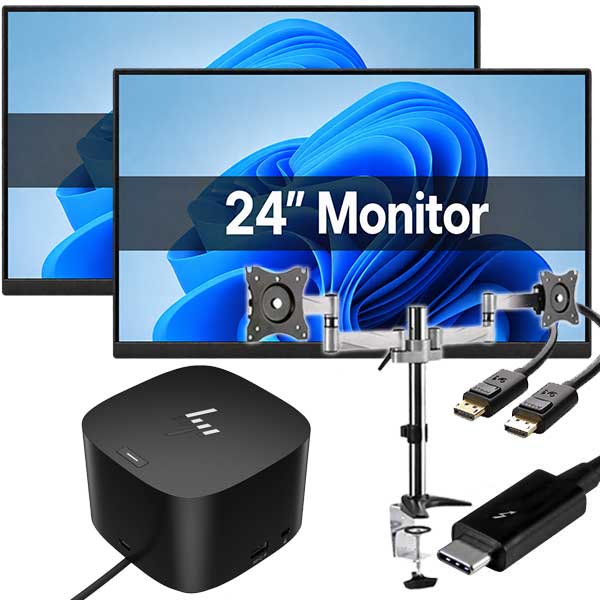
If your goal is a tidy two-screen workstation, it is worth choosing a complete setup that includes suitable monitors, arms, dock and cables.
Helpful related guides:
- How to Set Up Dual Monitors with a Docking Station
- Do You Need a Docking Station for Dual Monitors?
- Running Dual Monitors
- Dual Monitor Desk Mount Arms NZ Guide
What to Tell Us Before Buying a Dock
If you are not sure which docking station you need, send us the following details and we can help check compatibility.
- Your laptop brand and exact model
- A photo of the ports on the side of the laptop
- How many monitors you want to connect
- The monitor model or connection type, such as HDMI, DisplayPort, VGA or DVI
- Whether you want the dock to charge the laptop
- Whether you need USB-A, Ethernet, audio or extra accessories connected
This helps us recommend a suitable dock rather than guessing from the connector shape alone.
Related Products and Categories
NZ Laptop Wholesale stocks refurbished and ex-lease docking stations, monitors, laptops and complete workstation equipment. Availability changes often, so check current listings or contact us if you need help matching a dock to your laptop.
- Shop Docking Stations
- Shop Computer Monitors
- Shop Dual Monitor Bundles
- Shop Refurbished Laptops
- Ask NZ Laptop Wholesale for compatibility help
Related Buying Guides
- Your Guide to Docking Stations for Laptops in NZ
- What Is a Docking Station and Why Do I Need One?
- USB-C Docking Station Compatibility Guide
- Understanding USB-A vs USB-C Ports
- A Guide to Common Computer Video Ports
- HDMI vs DisplayPort: What’s the Difference?
Frequently Asked Questions
Does every USB-C port support a docking station?
No. Many USB-C ports support basic USB devices, but not all USB-C ports support video output, charging or full docking station features. For monitors, look for USB-C with DisplayPort Alt Mode or Thunderbolt support.
How do I know if my USB-C port supports video?
Look for a DisplayPort symbol or Thunderbolt lightning bolt beside the USB-C port, then check the laptop specifications. If you are unsure, send us the exact laptop model and we can help check.
What is DisplayPort Alt Mode?
DisplayPort Alt Mode lets a USB-C port send a DisplayPort video signal to an external monitor, dock or display adapter. It is one of the key features needed for many USB-C monitor setups.
Is Thunderbolt the same as USB-C?
No. Thunderbolt 3 and 4 use the USB-C connector shape, but Thunderbolt is a higher-performance connection standard. A Thunderbolt port is USB-C shaped, but a USB-C port is not automatically Thunderbolt.
Can I use a Thunderbolt dock with a USB-C laptop?
Sometimes, but not always. Some Thunderbolt docks have limited compatibility with non-Thunderbolt USB-C laptops, while others may not work properly. Check the dock and laptop specifications before buying.
Can I run two monitors from one USB-C port?
In some cases, yes. It depends on the laptop, USB-C port features, docking station, operating system and monitor resolution. If dual screens are your goal, check compatibility before ordering.
What if my laptop only has USB-A?
If your laptop only has USB-A, a normal USB-C dock will not be suitable. A DisplayLink-based USB dock may be an option for office use, but it will usually require drivers.
Do I need a docking station for dual monitors?
Not always, but a dock is often the cleanest and most convenient option. It can reduce cable clutter and allow your laptop to connect to monitors, keyboard, mouse, Ethernet and other accessories through one cable.
Will a docking station charge my laptop?
Only if the laptop supports charging through that port and the dock provides enough power delivery. Some laptops still need their original charger, especially higher-powered models.
Can NZ Laptop Wholesale help me choose the right dock?
Yes. Contact us with your laptop model, monitor requirements and any photos of the ports. We can help recommend a practical docking station, monitor or dual screen setup where available.
Need Help Choosing a Docking Station?
Buying a docking station should not be a guessing game. If you are unsure whether your laptop supports USB-C video, DisplayPort Alt Mode, Thunderbolt or dual monitors, contact NZ Laptop Wholesale before ordering.
We can help match refurbished laptops, docking stations, monitors and dual monitor bundles for home office, study and business use throughout New Zealand.
Shop Docking Stations Ask About Compatibility


