




General
How to Choose Ex Lease Monitors for Your Setup

A monitor can be the difference between a comfortable workday and eight hours of squinting, scrolling and shifting windows around. Knowing how to choose ex-lease monitors means looking beyond the price tag and matching a tested business-grade screen to the way you actually work, study or manage a home office.
Ex-lease monitors come from business fleets that have reached the end of a company lease. They are commonly made by enterprise brands such as Dell, HP and Lenovo, built for daily office use and designed with practical features that cheap new screens can miss. When professionally refurbished, they offer a sensible route to a reliable display without paying new retail prices.
Start with the job the monitor needs to do
The best monitor is not always the biggest or highest-resolution option. It is the one that makes your everyday tasks easier. A student writing assignments, a receptionist managing bookings and a designer editing detailed images have different needs.
For email, documents, web browsing and general office work, a 22-inch to 24-inch Full HD monitor is usually a strong value choice. Full HD, or 1920 x 1080 resolution, gives clear text at this size without requiring a powerful computer. It is also a practical option when buying several screens for a small office or school workspace.
A 24-inch or 27-inch monitor is often the better choice for spreadsheets, accounting software, remote work and multitasking. The added space makes it easier to keep two documents visible at once. If you regularly work with wide spreadsheets, large reports or multiple applications, screen space is a productivity feature rather than a luxury.
For detailed design work, photo editing or sharp text on a 27-inch panel, consider a higher-resolution QHD monitor at 2560 x 1440. It provides more room than Full HD, but check that your laptop or desktop supports the resolution through its available video output. Higher resolution is useful only if the rest of the setup can make proper use of it.
Choose screen size and resolution together
Size alone does not tell you how much usable workspace a monitor provides. Resolution matters just as much. A large 27-inch Full HD screen can be perfectly suitable for general work, especially when viewed from a normal desk distance. However, text and fine detail will look less crisp than on a 27-inch QHD model.
For most budget-conscious buyers, a 24-inch Full HD ex-lease monitor hits the sweet spot. It is compact enough for a standard desk, comfortable for office tasks and usually offers excellent value. If desk space is limited, a pair of 22-inch or 24-inch monitors can be more useful than one oversized display.
Before purchasing, measure the desk rather than guessing. Allow room for the monitor stand, keyboard, documents and a comfortable viewing distance. A screen that dominates a shallow desk can cause neck strain, even if it looked ideal in a product photo.
Check the ports before you buy
Port compatibility is one of the most common reasons a monitor purchase goes wrong. Look at the ports on your laptop, desktop or docking station first, then compare them with the monitor specifications.
Many reliable ex-lease monitors include DisplayPort, HDMI, DVI or VGA connections. DisplayPort and HDMI are the most convenient modern options. DVI can still provide a good digital image for older business desktops, while VGA is an analogue connection best kept for legacy equipment where no better option is available.
A monitor with DisplayPort is particularly useful in office environments because many business desktops and docking stations support it. If your laptop only has USB-C, check whether that USB-C port supports video output. Not every USB-C port does. You may need a suitable adapter, USB-C dock or cable depending on the equipment.
Do not assume an adapter will solve every connection issue. An inexpensive adapter may limit resolution or refresh rate, and some older devices have specific requirements. Matching ports from the beginning keeps the setup straightforward and avoids unnecessary extras.
Decide whether one monitor or two is better value
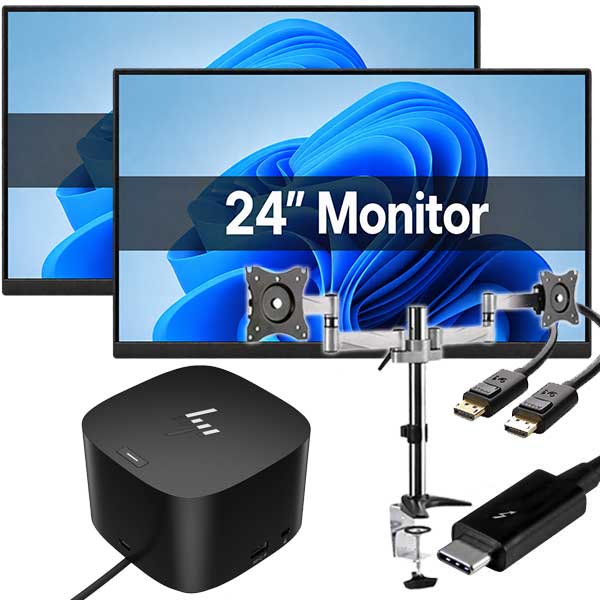
Dual-monitor setups are popular for good reason. One screen can hold email, Teams or reference material while the other is used for the main task. For administration, accounts, customer service, research and remote work, two matching 22-inch or 24-inch monitors can make a noticeable difference to daily efficiency.
The trade-off is desk space and connection capacity. Your computer needs to support two external displays, either directly or through a compatible docking station. A compact desktop may have two video outputs ready to use, while a laptop may need a dock to run dual screens reliably.
Matching monitors are generally the neatest option. They sit at the same height, have similar colour and brightness, and make the workspace feel more organised. They are not essential, though. If budget is tight, it is better to choose two dependable screens with the right ports than to hold out for a cosmetically perfect pair.
Understand condition grades and what to inspect
Ex-lease does not mean poor condition. It means the monitor has had a previous working life in a commercial environment. Business equipment is often replaced on a schedule, not because it has failed.
A professionally refurbished monitor should be tested for image quality, ports, controls and general operation. Cosmetic marks may still be present, particularly on the stand, rear casing or bezel. These usually do not affect performance, but the condition description matters. Be clear on whether you are comfortable with light wear in exchange for a sharper price.
When reviewing specifications and product details, pay attention to the panel itself. Ask whether there are visible scratches, pressure marks, dead pixels, bright spots or uneven backlighting. A small mark on the rear casing is very different from a fault in the display area.
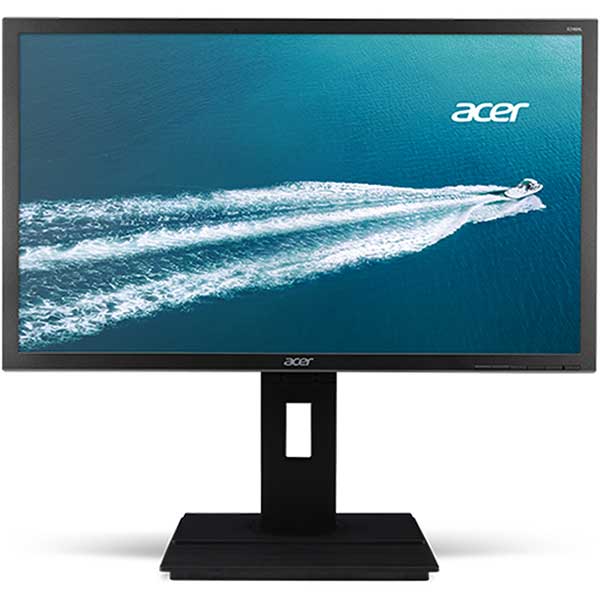
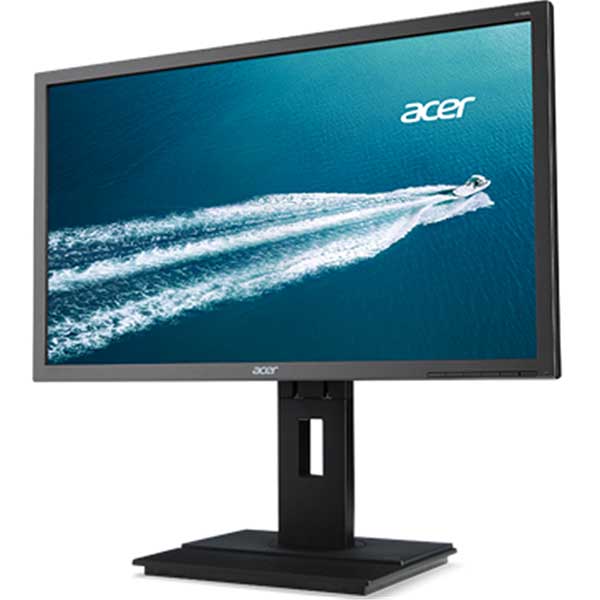
Also check whether the monitor includes a stand and power cable. Some business monitors are sold with their original adjustable stand, while others may suit a VESA mount or monitor arm. If ergonomics matter, an adjustable-height stand can be more valuable than a slightly larger screen. Being able to raise the display to eye level helps create a more comfortable workstation.
Look for practical business-grade features
Enterprise monitors are designed for offices, which is why they often have features that remain useful long after their first lease. Height adjustment, tilt, swivel and pivot functions make it easier to set up the display properly. Pivot is handy for documents, coding or long web pages, although it will not suit every task.
Thin bezels are useful when placing two screens side by side, while VESA mounting holes provide flexibility if you want to use a desk arm later. Built-in USB hubs can reduce cable clutter, but treat them as a bonus rather than the main reason to choose a monitor.
Panel type also affects the experience. IPS panels are popular for their wide viewing angles and consistent colour, making them a good all-round option. VA panels can offer stronger contrast, while older TN panels may be less colour-accurate but still work well for straightforward office tasks. For most work and study buyers, a tested IPS business monitor is an easy choice where available.
Do not overpay for features you will not use
It is easy to be drawn to curved screens, high refresh rates and gaming-focused specifications. These can be worthwhile for particular users, but they are not necessary for Word documents, online learning, invoices or general business applications.
Put your budget towards the things that matter every day: a suitable size, clear resolution, compatible ports, a stable stand and a known working condition. A reliable 24-inch Full HD monitor from a commercial brand will often serve an office or student setup better than the cheapest new screen with vague specifications.
Warranty also deserves attention. Refurbished equipment should give you confidence that the monitor has been checked and that there is support if a fault appears after purchase. This is especially relevant when ordering several units for a business, school or staff refresh.
A sensible buying checklist for ex-lease monitors
Before placing an order, confirm these points:
- The screen size and resolution suit your desk and daily tasks.
- The monitor has a compatible port for your computer, dock or adapter.
- Your device can support the required number of screens and resolution.
- The condition description is acceptable, including any cosmetic wear.
- A stand, power cable and any required accessories are included.
- The monitor has been professionally tested and is covered by a clear warranty.
For New Zealand buyers setting up a home office, replacing a failed display or equipping a team, ex-lease monitors are a practical way to get business-grade quality at a lower cost. NZ Laptop Wholesale focuses on professionally refurbished equipment because a good screen should be dependable, straightforward to connect and ready to earn its place on your desk.
Choose the monitor around the work you need to complete, not the most impressive number on a specification sheet. A properly sized, tested display with the right connection will be better value every day you use it.


